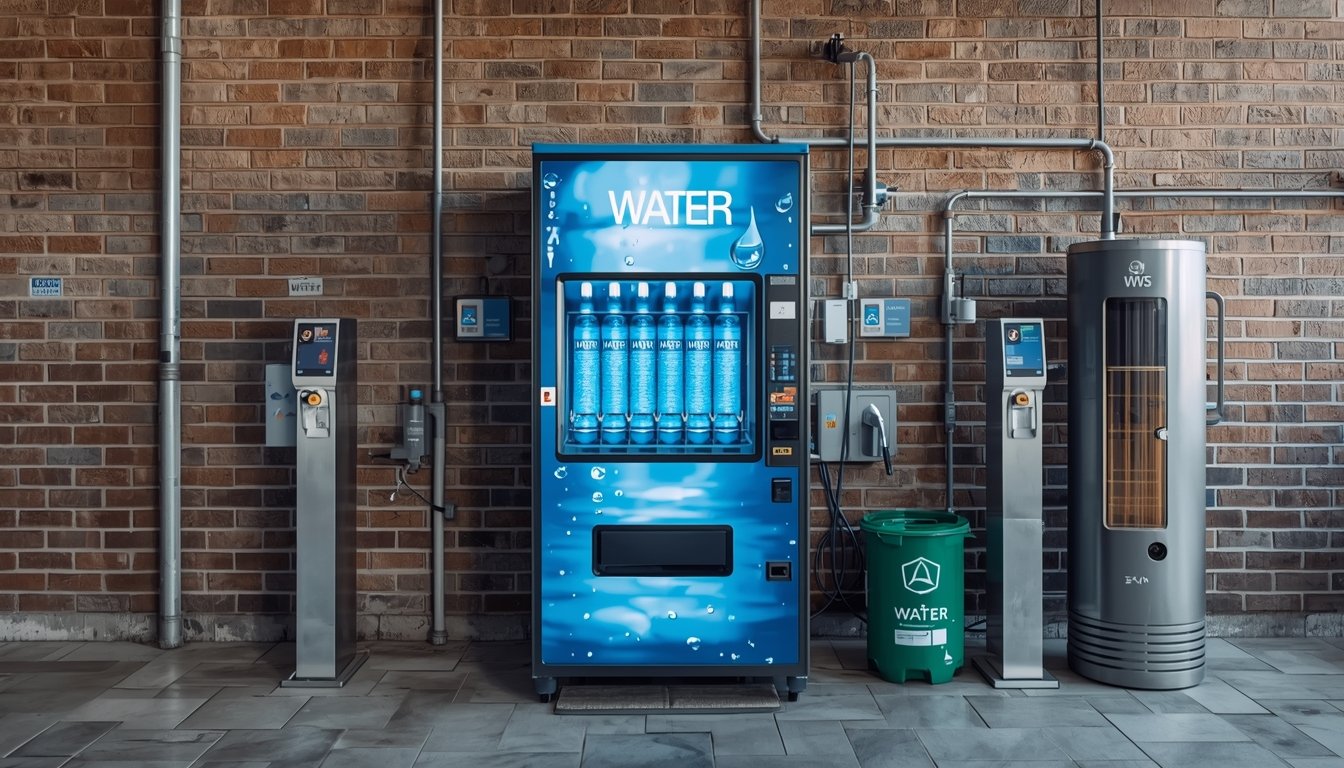
Water vending is becoming one of the most practical and promising business ideas in today’s market. As more people become aware of water quality, hygiene, convenience, and affordability, the demand for clean drinking water continues to grow. In many areas, families and businesses do not fully trust regular tap water for drinking purposes. At the same time, constantly buying branded bottled water can become expensive. This is where water vending offers a strong and useful solution.
At its core, water vending is a system where purified drinking water is sold directly to customers through vending machines, refill stations, kiosks, or self-service water dispensers. Customers can either bring their own containers or buy water in reusable jugs and bottles. This model is attractive because it combines convenience, lower packaging waste, and lower costs for consumers compared with traditional bottled water.
For entrepreneurs, water vending can be appealing because it serves a basic human need. People may cut back on luxury spending, but clean drinking water remains essential. That makes this business category more stable than many trend-based ideas. Whether installed in residential communities, commercial areas, transport hubs, schools, hospitals, or retail zones, water vending systems can create recurring daily demand when managed properly.
Another major reason why water vending is gaining attention is that it fits modern consumer habits. People increasingly want quick, easy, hygienic, and affordable access to products. A well-maintained water vending station can provide exactly that. It can operate for long hours, require fewer staff than a traditional shop, and create a more automated business model.
In this complete guide, you will learn what water vending is, how it works, why it is growing, the different types of water vending systems, major benefits, common challenges, setup requirements, location strategy, maintenance needs, and what makes a water vending business successful. Whether you are researching the industry, planning to launch a new venture, or simply trying to understand the concept, this guide will give you a clear and practical overview.
What Is Water Vending?
Water vending is the process of selling purified drinking water through an automated or semi-automated system. Instead of buying sealed single-use water bottles from a store, customers typically visit a vending point and fill their own containers with purified water for a lower cost. In some cases, the vending machine may also dispense pre-filled bottles or jugs, but refill-based systems are among the most common formats.
The basic idea is simple. Water is sourced, filtered, purified, stored safely, and dispensed through a machine or kiosk. Customers pay using coins, tokens, cards, QR systems, mobile payments, or cash, depending on the setup. The machine then releases the selected amount of water into the container.
This system can vary in scale. Some water vending units are small and designed for neighborhoods or apartment complexes. Others are larger commercial installations serving hundreds of people daily. In all cases, the goal remains the same: provide clean, safe, and affordable drinking water in a convenient way.
Water vending is often seen as a middle ground between expensive branded bottled water and untreated local water. It offers a more affordable option than buying packaged bottles every day while still giving consumers confidence that the water has been filtered and purified for drinking.
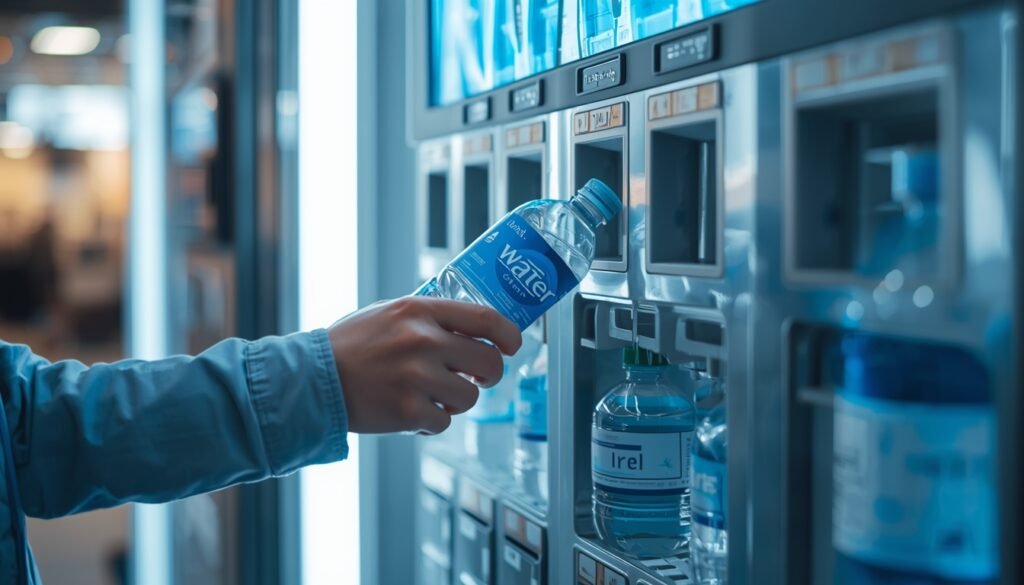
Why Water Vending Is Growing in Popularity
The growth of water vending is closely tied to changing consumer behavior and rising awareness of water quality. In many places, people are no longer comfortable drinking untreated tap water. Concerns about contamination, taste, odor, mineral imbalance, aging pipelines, and local water quality issues have pushed consumers toward alternative drinking water solutions.
At the same time, traditional bottled water is not always an ideal answer. Buying bottled water every day can become expensive for families, offices, and small businesses. It also creates a large amount of plastic waste, which has become a growing environmental concern. Water vending gives people a way to access drinking water at a lower cost while often using refillable containers, reducing single-use packaging.
Convenience also plays a major role. Consumers increasingly prefer fast and easy access to essential goods. A water vending machine placed in the right location can serve people quickly without requiring them to enter a full store, wait in line, or depend on delivery schedules. This makes the concept especially useful in busy urban areas and communities where daily water access is important.
Entrepreneurs are also noticing the opportunity. Because water vending focuses on a basic need, demand can be more stable than in many other automated retail models. When set up in a good location and maintained properly, it can generate recurring revenue with relatively lean staffing requirements.
How Water Vending Works
To understand water vending, it helps to break the process down into simple stages. First, water enters the system from a source. This may be municipal water, bore water, or another approved supply depending on the business model and local regulations. Once inside the system, the water passes through different filtration and purification stages.
Common treatment steps may include sediment filtration, activated carbon filtration, reverse osmosis, ultraviolet sterilization, ozone treatment, or mineral balancing. The exact process depends on the setup, the source water condition, and the desired quality standard. The goal is to remove impurities, improve taste, reduce contaminants, and make the water safe for drinking.
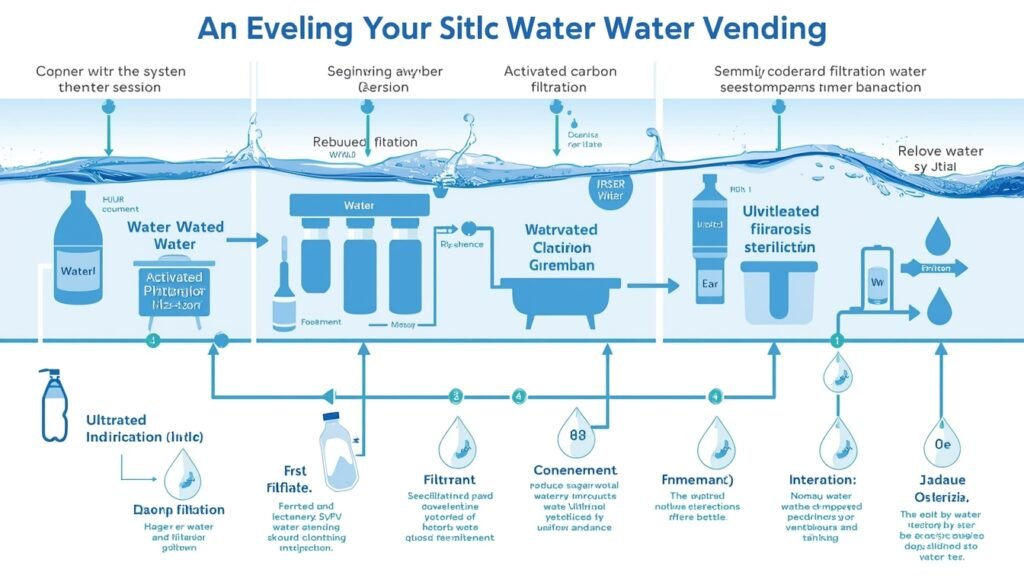
After purification, the water is stored in a hygienic tank or enclosed holding system until dispensing. Customers then approach the machine, place a container in the fill area, make payment, and select their desired quantity. The machine dispenses water accordingly.
Some advanced water vending machines also include automated flushing systems, touchless dispensing, digital monitoring, usage tracking, remote diagnostics, and maintenance alerts. These features help improve hygiene, customer trust, and operational efficiency.
The machine itself is only one part of the business. Behind the scenes, the owner must ensure regular filter replacement, tank cleaning, quality testing, sanitization, payment system reliability, and overall machine upkeep. The success of water vending depends not just on installation but on consistent service quality.
Types of Water Vending Systems
There is no single model for water vending. Different business environments require different systems, and understanding these options is important before launching.
Self-Service Water Refill Stations
These are among the most common forms of water vending. Customers bring their own bottles or water cans and refill them directly from a dispensing machine. These stations are popular because they reduce plastic waste and keep prices affordable for repeat users.
Kiosk-Based Water Vending
A kiosk-based setup may combine automation with limited staff support. These are often found in busy areas where customer education, container sales, or maintenance oversight is needed. Kiosks may look more like mini water shops with vending features built in.
Standalone Water Vending Machines
These fully automated machines are designed to operate with minimal human involvement. They are suitable for malls, transport stations, residential gates, campuses, and public access zones. They focus on convenience and round-the-clock or extended-hour service.
Bottle and Jug Dispensing Models
Some water vending businesses focus on dispensing larger water quantities into reusable jugs or offering filled containers. This model may serve families, offices, and workplaces that need more volume than standard personal bottles.
Smart Water Vending Units
More advanced systems include IoT features, digital payments, remote monitoring, filter alerts, and customer usage tracking. These systems are more expensive upfront but may improve long-term efficiency and business control.
Key Benefits of Water Vending
One of the biggest strengths of water vending is that it solves a real and everyday problem. People need drinking water daily, which means the product has continuous relevance. This makes the business easier to understand than many complex startup ideas.
Another major benefit is affordability for customers. Water vending usually costs less than buying branded bottled water regularly. This creates strong appeal in areas where people want cleaner water without paying premium retail prices.
Convenience is another advantage. When a water vending unit is placed in a practical location, customers can refill quickly and continue with their day. This ease of access supports repeat usage and habit formation, which is extremely valuable for business sustainability.
The model can also support environmental goals. Because many water vending systems encourage reusable containers, they can reduce dependence on single-use plastic bottles. This helps appeal to consumers who care about sustainability while also reducing packaging-related costs.
From a business standpoint, water vending can offer operational efficiency. Compared with a traditional shop, it may require fewer staff, smaller space, and more automation. Once installed and running properly, the machine can serve many customers without constant manual sales handling.
It can also scale gradually. An entrepreneur may start with one machine in a strong location, study customer demand, and expand into multiple units over time. This makes it a potentially flexible business model.
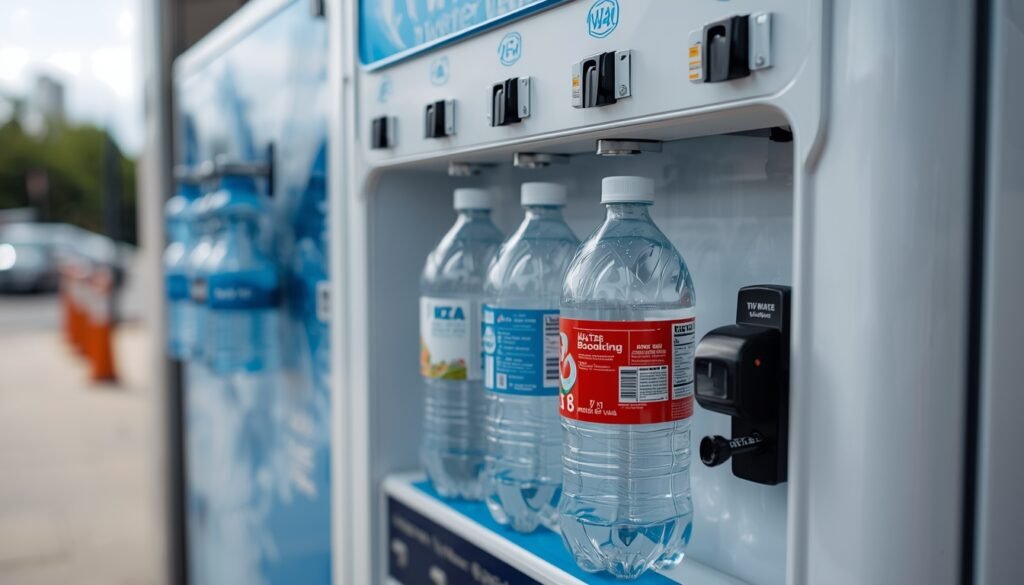
Why Consumers Choose Water Vending
The reason people choose water vending usually comes down to trust, cost, and ease. Many consumers want better quality drinking water than what they believe is available from untreated local supply. They may not need premium luxury bottled water, but they do want something cleaner and safer than basic tap water.
Price matters a lot as well. Families that consume large amounts of drinking water every week often look for a more economical solution. Water vending provides a refill-based option that can save money over time, especially for households that already use reusable containers.
Some people also prefer the control that comes with refilling their own bottles or jugs. They can choose quantity, timing, and frequency based on their own routine. Rather than depending on store hours or delivery schedules, they can access water when needed.
A clean, branded, well-maintained machine can build strong customer confidence. When consumers see a hygienic setup, clear labeling, filtration information, and reliable dispensing, they are more likely to return. In many ways, the success of water vending depends on whether the customer feels safe and comfortable using the machine repeatedly.
Best Locations for a Water Vending Business
Location is one of the most important factors in water vending success. Even a high-quality machine may underperform if it is placed where demand is weak or access is inconvenient.
Residential neighborhoods can be strong locations, especially in areas where people regularly purchase drinking water separately from household utility water. Apartment complexes, gated communities, and suburban clusters can generate repeat daily customers.
Commercial districts can also work well, particularly where office workers, shop staff, and visitors need easy access to drinking water. Schools, colleges, hospitals, transport stations, markets, and community centers are other potential high-demand zones.
The best locations usually share a few traits. They have regular foot traffic, a population that values drinking water quality, safe access, and enough space for customers to approach and fill containers easily. Visibility is also important. A machine hidden in a corner may struggle even in a busy area.
Security matters too. Because water vending equipment has value and often includes payment systems, it should be installed in a place where theft, vandalism, and misuse are less likely. Lighting, camera coverage, and structured placement can all help.
A good location does not just create first-time usage. It supports habit. Since drinking water is a recurring need, the real goal is repeated customer behavior over time.
Equipment Needed for Water Vending
A successful water vending setup requires more than a machine alone. The core of the system usually includes a source water connection, filtration and purification units, storage tanks, dispensing hardware, payment interface, and protective housing.
Filtration and purification equipment is especially important. Depending on source water quality, the system may need sediment filters, carbon filters, reverse osmosis membranes, UV sterilizers, ozone treatment systems, or mineral cartridges. The right combination depends on local water conditions and the standard you want to maintain.
Storage tanks must be food-safe, hygienic, and properly maintained. Dispensing nozzles and fill areas should be designed for cleanliness and ease of use. The machine should also include a clear and simple payment mechanism, whether that is coin-based, token-based, digital, or mixed.
Signage is another overlooked but important element. Customers should understand how to use the machine, what type of water treatment is used, what quantity options are available, and how often the system is serviced. Clear information builds trust.
Some operators also add branding, shade structures, lighting, drainage solutions, and CCTV to improve usability and security. These details may seem minor at first, but they affect customer experience and operational stability.
Challenges in Water Vending
Like any business, water vending comes with challenges. One of the biggest is maintenance. Customers expect clean and safe drinking water, so there is very little room for carelessness. Filters need to be replaced on time, tanks need cleaning, dispensing zones need sanitization, and the machine must be checked regularly.
Water quality testing is also essential. If quality drops, customer trust can disappear quickly. Since drinking water directly affects health, poor maintenance can lead not only to business failure but also to serious legal and reputational consequences.
Another challenge is downtime. If the machine breaks, stops accepting payment, leaks, dispenses slowly, or develops hygiene issues, customers may stop returning. Reliability is crucial in this business because people expect water access to be smooth and immediate.
Location costs can also affect profitability. A premium spot may produce better sales but come with high rent or placement fees. On the other hand, a low-cost location may not generate enough traffic. Balancing cost and demand is important.
Competition is another factor. In some markets, consumers may already rely on bottled water brands, local refill stores, or home filtration systems. A water vending business needs a clear value proposition to stand out.
Is Water Vending a Good Business Opportunity?
For the right operator, water vending can be a very strong business opportunity. It serves a constant need, supports repeat usage, and can be more automated than many retail models. It also aligns with trends in health awareness, convenience, and refill culture.
However, it is not a “set it and forget it” business. The most successful operators treat it as a quality-driven service business, not just a machine placement idea. They focus on hygiene, reliability, smart location selection, customer trust, and consistent monitoring.
Profitability usually depends on daily volume, operating costs, machine quality, rent, maintenance, and pricing strategy. A good unit in a strong location with repeat customers can become a stable source of income. A poorly maintained or badly placed unit may struggle even if the product itself is essential.
So yes, water vending can be a good opportunity, but success depends on execution. The businesses that do well are the ones that treat water as a trust-based product.
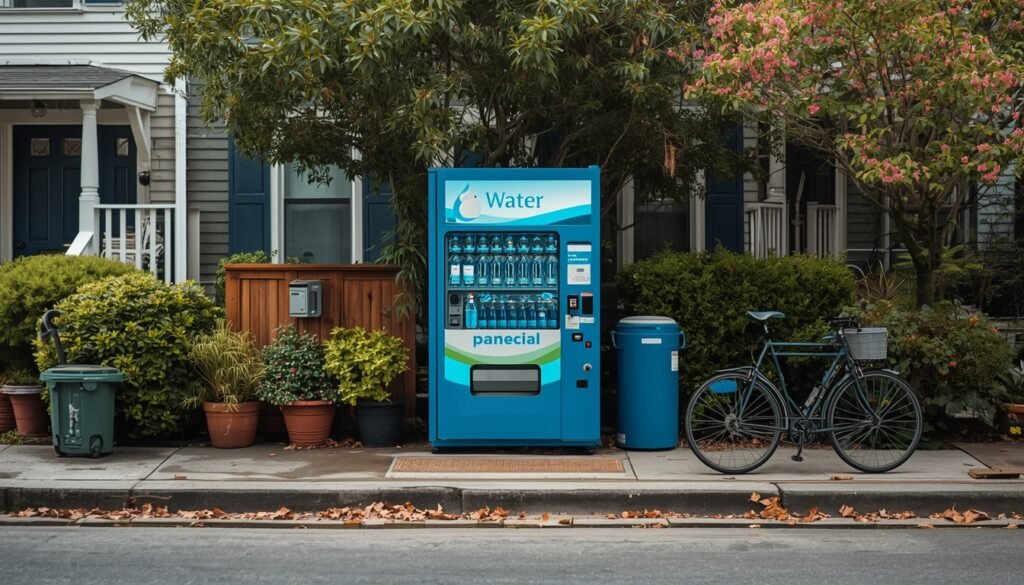
Final Thoughts on Water Vending
Water vending is more than just a machine dispensing water. It is a business model built around one of the most basic and constant human needs: access to clean drinking water. That is exactly why it has strong long-term potential. It combines convenience, affordability, refill culture, and automation in a way that makes sense for both customers and business owners.
For consumers, it offers a practical alternative to expensive bottled water and questionable untreated water. For entrepreneurs, it offers the chance to build a recurring-demand business around a product people need every day. But the real key is quality. In water vending, trust is everything. The cleaner, safer, and more reliable your service is, the stronger your reputation becomes.
A well-managed water vending setup can serve communities, reduce packaging waste, and create a sustainable business path at the same time. That makes it a category worth serious attention in today’s market.
FAQs About Water Vending
What is water vending?
Water vending is the sale of purified drinking water through refill stations, vending machines, or automated kiosks where customers fill their own containers or purchase water directly.
Is water vending profitable?
It can be profitable when placed in the right location, maintained properly, and supported by strong customer trust and regular repeat demand.
Who uses water vending services?
Households, office workers, students, travelers, and communities that want affordable and clean drinking water often use water vending systems.
What makes a water vending business successful?
Good location, consistent water quality, regular machine maintenance, clear branding, easy payment systems, and customer trust all play major roles.
Is water vending better than bottled water?
For many users, water vending can be more affordable and environmentally friendly because it often supports reusable containers instead of single-use bottles.
Does water vending require maintenance?
Yes, regular maintenance is essential. Filters, tanks, dispensing areas, and purification systems must be cleaned, tested, and serviced consistently.
Leave a Reply