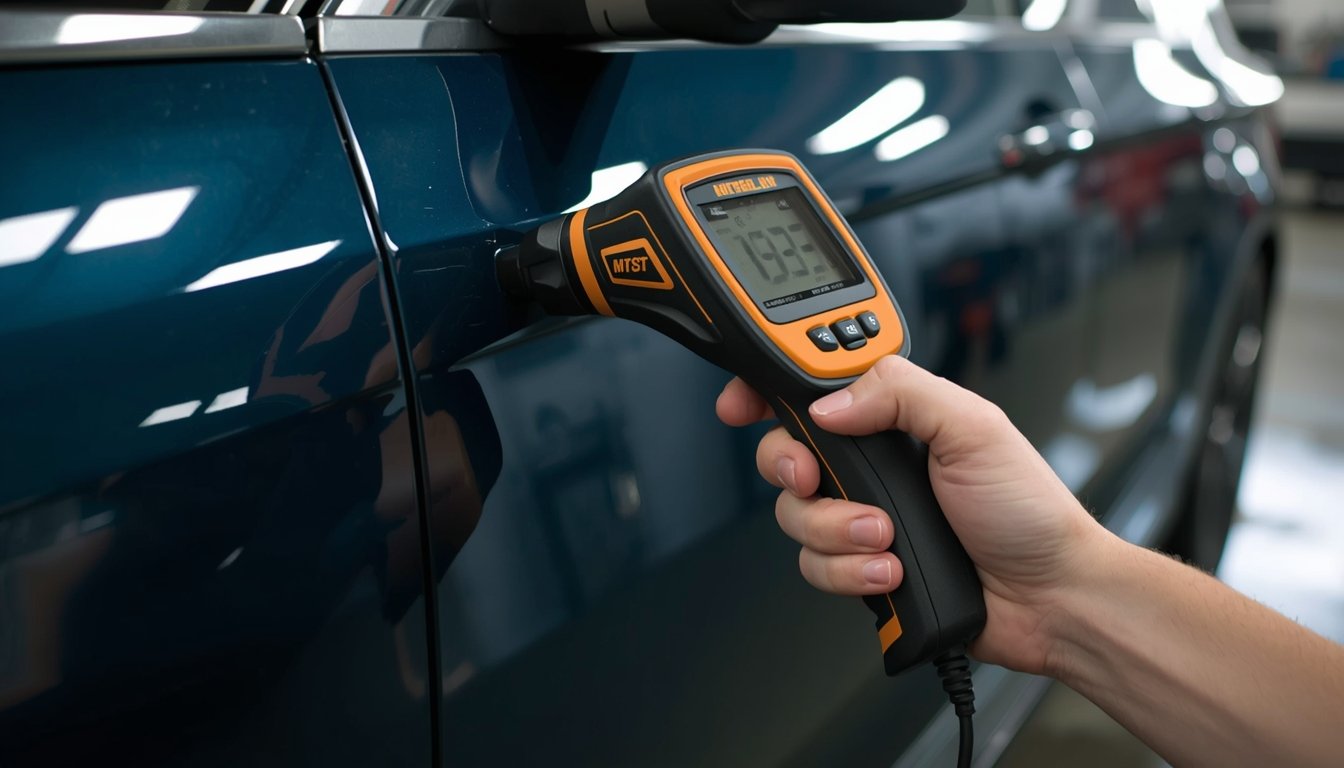
A car paint tester is one of the most useful tools for anyone who wants to know the real condition of a vehicle’s body. At first glance, a car may look clean, glossy, and well cared for, but that does not always mean the paint is original. Many vehicles have had repainting, panel repairs, filler work, or body shop corrections that are almost impossible to identify with the naked eye alone. This is where a car paint tester becomes extremely valuable.
Whether you are buying a used car, inspecting a repaired vehicle, detailing your own car, or working professionally in automotive care, a car paint tester helps remove guesswork from the process. Instead of relying only on visual appearance, you can measure paint thickness and compare panel readings to spot possible repair history. This makes your inspection smarter, safer, and far more accurate.
For used car buyers, it can help reveal hidden accident repairs. For detailers, it can help avoid burning through thin clear coat during polishing. For collectors, it can help confirm originality. For body shops and dealers, it can support better evaluation and pricing decisions. In simple terms, this small device can tell a much bigger story about a car than most people expect.
In this complete guide, you will learn what a car paint tester is, how it works, why it matters, how to use it properly, what paint thickness readings usually mean, and what to look for when buying one. If you want to understand a vehicle beyond its shine, this tool deserves your attention.
What Is a Car Paint Tester?
A car paint tester is a handheld device that measures the thickness of paint and coating layers on a vehicle’s body panels. Most models measure in microns or mils, depending on the device settings and region. The reading usually represents the total coating thickness above the metal surface, including primer, base coat, and clear coat. If a panel has been repaired, repainted, or filled, the thickness often changes noticeably.
This makes the tool especially useful when inspecting used vehicles. Factory paint usually has a relatively consistent thickness across the car, even though some minor variation is normal. If one panel reads much higher than the rest, it often suggests repainting or repair. If it reads extremely low, it may indicate aggressive polishing or sanding in the past.
A car paint tester is not just for professionals. Today, many affordable digital models are available for ordinary buyers and enthusiasts. That means even first-time used car shoppers can use one to inspect vehicles more confidently and avoid expensive surprises.
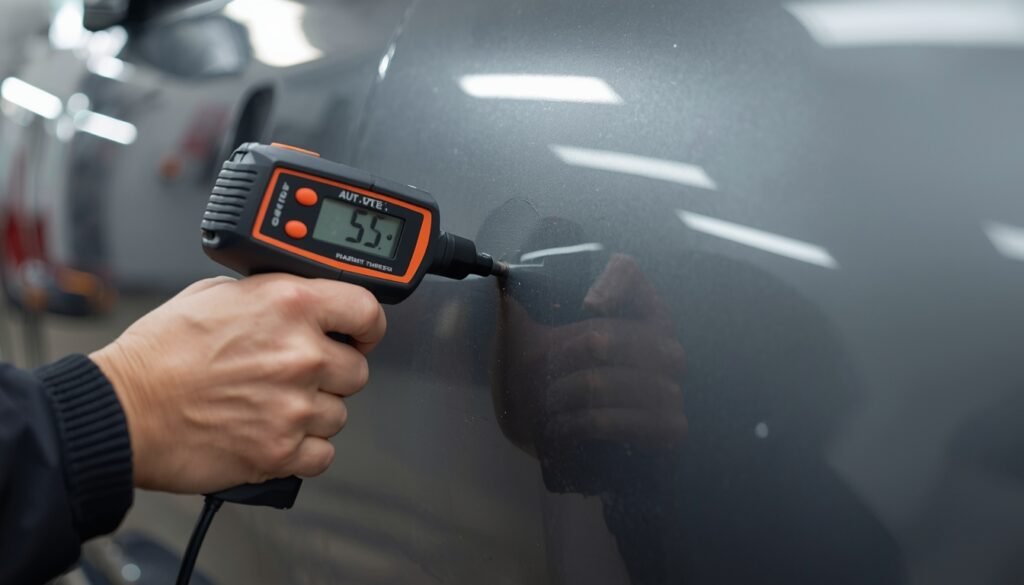
Why a Car Paint Tester Matters
A car’s paint tells a hidden story. A smooth, glossy finish might look perfect in photos or in a showroom, but beneath that shine there may be bodywork, repainting, or accident repair. Without a measuring tool, even experienced buyers can miss those signs, especially when the repair has been done neatly. A car paint tester adds real data to the inspection process.
For used car buyers, this matters because bodywork affects value, resale confidence, and sometimes structural history. A seller may describe a car as untouched or fully original, but inconsistent paint thickness can suggest otherwise. That does not always mean the car is bad, but it does mean you should ask more questions before making a decision.
For detailers, the tool matters for a different reason. Polishing and paint correction remove a tiny amount of clear coat. If the surface is already thin, aggressive polishing can damage the finish permanently. A car paint tester helps determine how safe it is to compound, polish, or correct defects on different panels.
For enthusiasts and collectors, originality often affects desirability. On some cars, original paint can add significant value. On others, evidence of poor repair work can reduce confidence quickly. In both cases, the tester helps confirm what your eyes alone cannot.
How a Car Paint Tester Works
A car paint tester measures the distance between the outer coating and the metal beneath it. Most automotive paint thickness gauges work using magnetic induction on steel panels and eddy current technology on aluminum panels. Advanced models may detect the substrate automatically, while simpler ones may only work on certain materials.
When you place the device flat on a painted panel, it sends a signal to determine the thickness of the coating. The number shown on the display represents the total thickness of all paint layers above the metal. That means it does not separate primer from clear coat individually, but it still provides strong evidence about whether a panel may have been repainted or repaired.
The most important part is not one single reading. The real value comes from comparing multiple readings across the car. If the hood, doors, roof, and quarter panels all stay in a similar range, that suggests consistency. If one panel is dramatically thicker than the rest, that often points to repainting or filler work.
This is why a car paint tester should always be used as a comparison tool, not just a number-checking gadget. Patterns matter more than isolated results.
Common Paint Thickness Ranges
One of the most important things to understand about a car paint tester is that factory paint thickness is not exactly the same on every car. Different manufacturers, production methods, paint systems, and panel materials can all influence readings. Even so, many factory-finished vehicles often fall somewhere around 80 to 180 microns.
Some vehicles may read lower, while others may naturally run higher. What matters most is uniformity. If most panels on a car measure around 110 to 140 microns, that is usually a good sign of consistency. If one door suddenly measures 280 or 350 microns while the surrounding panels remain near 120, repainting becomes much more likely.
Higher readings do not always mean severe damage, but they often suggest extra material has been added. That could include a second paint layer, body filler, or heavier repair work. Extremely high readings may indicate substantial correction after an accident or dent repair.
Lower readings can also matter. A panel that is significantly thinner than expected may have been polished aggressively in the past. This becomes important if you plan to detail or correct the paint because thin clear coat leaves less room for safe polishing.
A car paint tester helps turn the condition of a car into measurable information rather than guesswork.
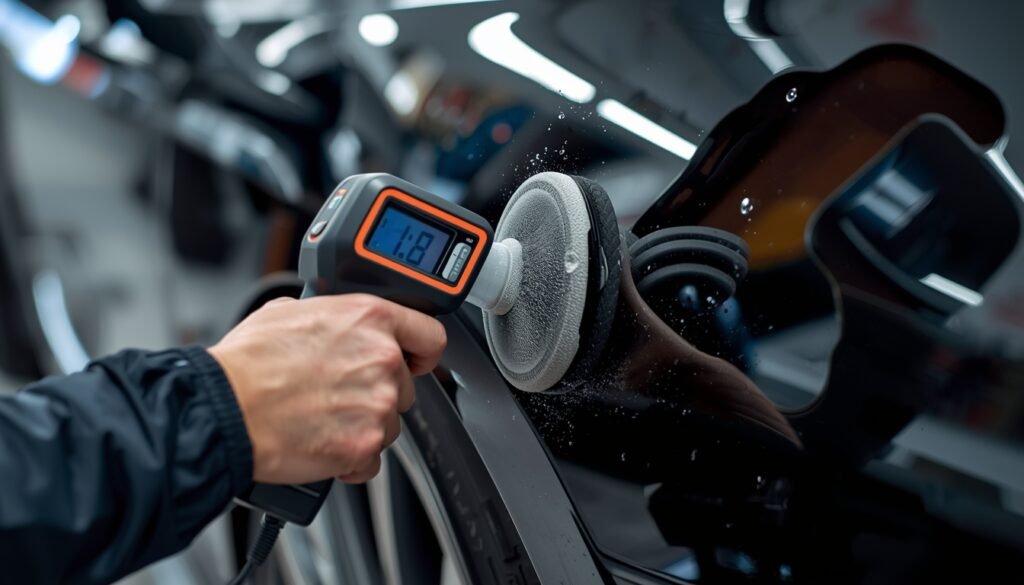
Types of Car Paint Tester Devices
There are several kinds of car paint tester tools on the market, and choosing the right one depends on how you plan to use it.
Basic Paint Testers
Basic models are usually designed for casual users and used car buyers. They may work only on steel panels and often provide straightforward digital readings without advanced features. These are helpful for quick inspections and can still reveal obvious repainting on many vehicles.
Mid-Range Digital Testers
Mid-range models are a strong choice for enthusiasts, flippers, and serious buyers. These usually support both steel and aluminum, offer clearer displays, and provide better consistency. For most people, this category gives the best balance of price and function.
Professional Paint Thickness Gauges
Professional-grade tools are built for frequent use by detailers, dealerships, inspectors, and body shops. These may include memory storage, advanced calibration, statistics, app syncing, and more accurate readings. If you inspect cars regularly or work on customer vehicles, a higher-end tool can be worth the investment.
Analog or Pen-Style Testers
Some older or low-cost testers use simple analog designs. They may work for rough checks, but they are usually less precise than digital units. For modern vehicle inspections, digital testers are generally easier to trust and easier to use.
When You Should Use a Car Paint Tester
A car paint tester can be useful in several situations, and each one offers a clear benefit.
The most common use is when buying a used car. Photos and seller descriptions never tell the full story. A vehicle may look excellent on the outside, but thickness readings can reveal which panels are likely original and which may have been repaired. This can help with negotiation, decision-making, and overall confidence.
Another important time to use one is before paint correction. If you plan to compound or polish a car, measuring the paint first is the smart move. Some panels may have enough thickness for correction, while others may already be thin from earlier work. Without a tester, you are working blindly.
It is also valuable after body repairs. If a vehicle was recently repainted or repaired, a paint tester can help check how consistent the finish is across the body. It will not judge paint quality by itself, but it can show whether certain areas have more build-up than others.
Collectors and enthusiasts can use it to verify originality. On special cars, original paint often matters for value and authenticity. A car paint tester can support or challenge claims that a car has never been repainted.
Even ordinary owners can benefit from using one before applying ceramic coating, selling the car, or planning future detailing work.
How to Use a Car Paint Tester Properly
Using a car paint tester is simple, but technique matters if you want dependable results. Start by making sure the car is clean and dry. Dirt, wax buildup, or moisture can affect how the probe sits on the panel and may create inconsistent readings.
If your device requires calibration, do that first using the supplied calibration plates or films. This is an important step and should never be skipped, especially if you want to compare readings seriously.
Once the tool is ready, place the probe flat on the painted surface. Avoid tilting it or pressing too hard. Take several readings on each major panel rather than relying on a single point. Check the hood, roof, trunk, doors, front fenders, rear quarter panels, and pillars if accessible.
It is best to test each panel in multiple places. Check the center, upper area, and edges where possible. If the readings remain fairly consistent across the panel and similar to nearby panels, that is usually a good sign. If the numbers vary widely, it may indicate repair work, blending, or spot refinishing.
Be aware of material differences. Some cars use aluminum hoods, doors, or fenders, while others mix steel and aluminum in the same body. Make sure your car paint tester supports both. Also remember that standard paint thickness gauges usually do not work properly on plastic bumpers in the same way they do on metal panels.
How to Read the Results
A car paint tester gives you numbers, but the real skill is knowing how to interpret them. The most useful method is comparative reading. Instead of asking whether one number is “good” or “bad,” compare it with neighboring panels and the overall vehicle pattern.
For example, imagine most of the car reads between 105 and 135 microns. If the left rear door reads 118, that looks consistent. But if the right front fender reads 310 microns, that panel has likely been repainted. If another section of the same fender reads 420 microns, there may be filler or heavier repair beneath the paint.
If the roof reads very thin compared to the rest of the car, it may have been polished heavily or exposed to significant wear. If an entire side of the vehicle reads noticeably thicker, that could point to previous collision repair. If one panel reads inconsistently from spot to spot, there may have been localized work.
The tester does not give a final verdict by itself. Instead, it provides evidence. That evidence becomes stronger when combined with visual inspection, panel gaps, overspray signs, texture differences, bolt marks, weld inspection, and vehicle history checks.
Signs a Car May Have Been Repainted
A car paint tester is especially useful for spotting likely repainting. One major sign is a panel with readings far higher than the surrounding panels. Factory paint tends to remain relatively uniform, so large jumps often suggest refinishing.
Another sign is inconsistency across the same panel. If one part of a door reads 120 microns and another part reads 260, that difference may indicate spot repair or blending. Factory coating is rarely that uneven without a reason.
Edges and corners can also reveal clues. Some repaired areas may show different readings near body lines or transitions. If those thickness differences match visible signs like slight texture changes, overspray, or mismatched reflection, repainting becomes more likely.
Still, not every repaint is a disaster. A high reading does not automatically mean serious crash damage. Sometimes owners repaint panels for scratches, cosmetic damage, fading, or minor dents. That is why a car paint tester should guide further questions, not create instant panic.

Benefits of Using a Car Paint Tester Before Buying a Used Car
Buying a used car always involves some risk, but a car paint tester can reduce that risk significantly. One of the biggest advantages is that it helps uncover hidden repairs. A vehicle can be cleaned, polished, and staged beautifully for sale, but paint thickness readings can still reveal what the surface is hiding.
This matters for price negotiation. If a seller claims the car is all original but the tester suggests repainting on multiple panels, you have useful evidence to discuss value more confidently. It may also help you decide whether to proceed at all.
Another benefit is peace of mind. Sometimes a car simply has one repainted bumper or a cosmetic repair, and the rest is solid. In that case, the tester helps confirm that the issue is limited rather than widespread.
For buyers who plan to keep the vehicle long term, understanding the true condition at the time of purchase is important. It helps you make a more informed decision and protects you from surprise discoveries later.
Choosing the Right Car Paint Tester
If you are buying a car paint tester, think first about your purpose. If you only inspect a few used cars occasionally, a simple digital model may be enough. If you detail cars, flip vehicles, or inspect them regularly, it makes sense to get a more accurate unit with support for both steel and aluminum.
Look for a clear display, fast readings, and reliable calibration. A tester that gives stable, repeatable numbers is far more useful than one with many features but poor consistency. Dual-substrate support is especially important because many modern cars use mixed materials.
Memory storage can be useful if you inspect cars often or want to document readings for customers. Build quality also matters. A good protective case and durable design make a difference if you carry the tool regularly.
The best car paint tester is not necessarily the most expensive one. It is the one that gives dependable readings, suits your use case, and helps you make better decisions.
Common Mistakes to Avoid
One mistake many people make is assuming every high reading means major accident damage. That is not always true. Repainting may come from cosmetic work, chip repair, or minor dents. The tester reveals added material, but not the full reason behind it.
Another common mistake is taking too few readings. One reading on one panel is never enough. The more points you test, the clearer the pattern becomes. Skipping calibration is also a problem, especially with digital units that depend on proper setup.
Many users also forget about substrate limitations. A tester designed only for steel may not work on aluminum panels. Others try to test plastic bumpers and become confused when the readings do not make sense. Knowing the device’s limits is part of using it correctly.
Finally, some buyers depend only on the tester and ignore visual clues, service records, and overall condition. A car paint tester is powerful, but it works best as part of a complete inspection.
Is a Car Paint Tester Worth It?
For most serious buyers and enthusiasts, yes. The cost of a car paint tester is often small compared with the value of the information it provides. One hidden repair discovered before purchase can justify the tool immediately. One avoided polishing mistake can save a panel. One verified originality claim can protect resale value.
If you buy used cars often, detail your own vehicles, or want to inspect cars with more confidence, a paint tester is absolutely worth having. It is one of those tools that seems optional until you use it once and realize how much it reveals.
Final Thoughts
A car paint tester is a small tool with a big purpose. It helps uncover repainting, detect possible filler work, evaluate paint safety, and support smarter decisions when buying, detailing, or selling a car. In a market where appearance can easily mislead, actual measurement matters.
The biggest advantage of a car paint tester is confidence. Instead of guessing whether a panel has been repaired, you can compare real numbers. Instead of polishing blindly, you can work more safely. Instead of trusting claims alone, you can verify condition more carefully.
Whether you are a used car buyer, a professional detailer, a collector, or simply someone who wants to understand a car better, this tool is worth serious consideration. It adds clarity to inspections, improves decision-making, and helps you see beyond the shine.
FAQs About Car Paint Tester
What does a car paint tester do?
A car paint tester measures the thickness of paint and coating layers on a car’s metal panels. It helps identify repainting, repair work, and thin paint areas.
Can a car paint tester detect accident repairs?
It cannot confirm an accident by itself, but it can show paint thickness differences that often suggest repairs or repainting after damage.
What is a normal paint thickness reading on a car?
Many factory-finished vehicles commonly fall around 80 to 180 microns, but the most important thing is consistency across the vehicle.
Can I use a car paint tester on aluminum panels?
Yes, but only if the device supports aluminum. Many modern cars use both steel and aluminum, so dual-substrate support is recommended.
Does a car paint tester work on plastic bumpers?
Most standard paint testers are designed for metal surfaces and do not provide the same type of measurement on plastic bumpers.
Is a car paint tester useful for detailing?
Yes, it is very useful before polishing or paint correction because it helps identify thin areas and reduces the risk of damaging the clear coat.
Leave a Reply