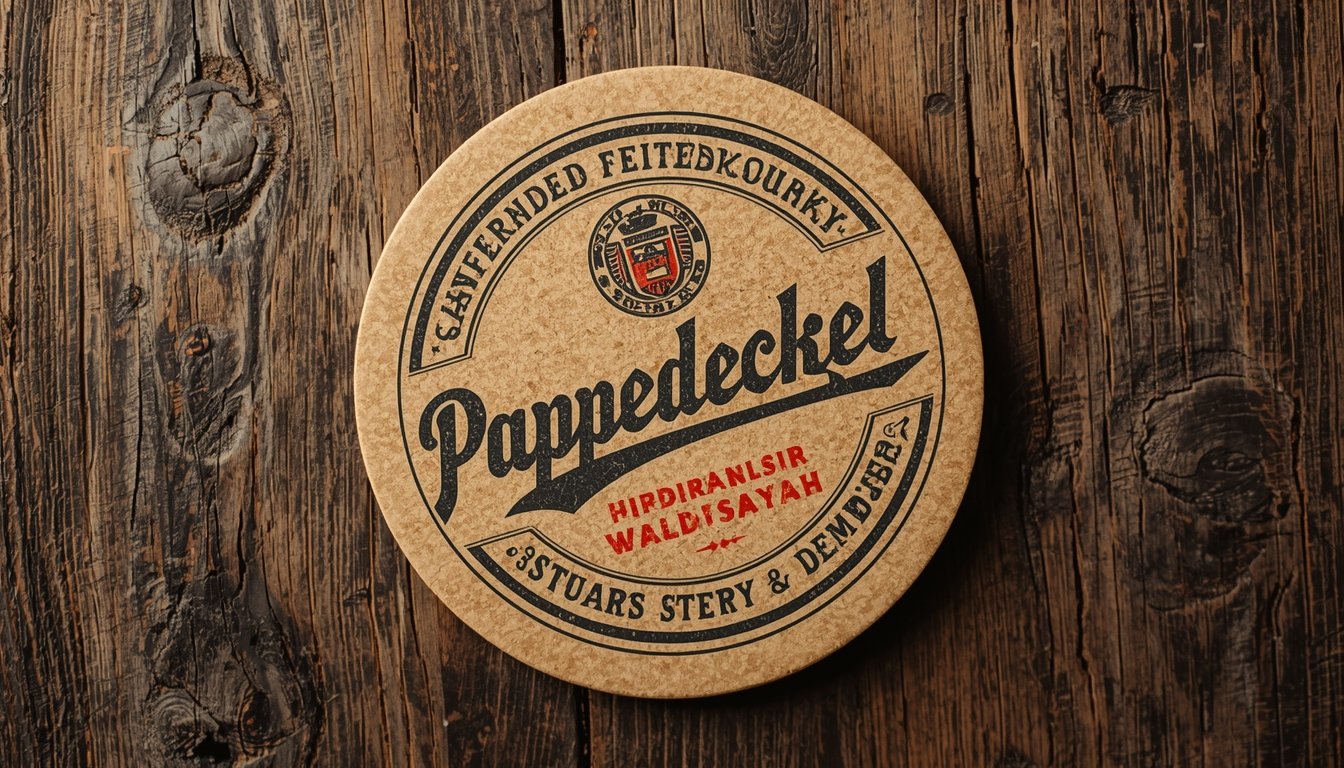
The word pappedeckel may look unusual at first, especially to readers outside the German-speaking world, but its meaning becomes much easier once it is placed in context. In practical usage, it points to something made of cardboard or stiff paperboard, and it closely overlaps with the standard German forms Pappdeckel and Pappendeckel. In English, that idea connects to words such as cardboard, paperboard, or pasteboard, depending on how the material is being used.
What makes pappedeckel interesting is that it does not feel like a technical term once you understand it. It belongs to the world of ordinary objects, useful surfaces, and materials people handle without thinking very much about them. That is why the word can seem simple and rich at the same time. It points to something humble, but also something deeply practical, especially in settings where paper-based utility matters more than decoration.
The Word Behind the Material
At its core, pappedeckel is easiest to understand through the material itself. The related dictionary entries show that Pappdeckel and Pappendeckel are tied to the idea of Pappe, meaning cardboard or board-like paper material. Duden also lists Karton and Pappe as synonyms for Pappdeckel, which helps clarify that the word belongs to the broader family of cardboard-based objects rather than to one narrow product alone.
That material connection matters because it gives the word a very grounded feel. A pappedeckel is not imagined as something luxurious or permanent. It suggests a surface that is sturdy enough to serve a purpose, yet still lightweight, printable, and easy to produce. In that sense, the word carries a quiet practicality. It belongs to the kind of object people rely on in daily settings without needing to admire it first.
Why Pappedeckel Is So Closely Linked to Coasters
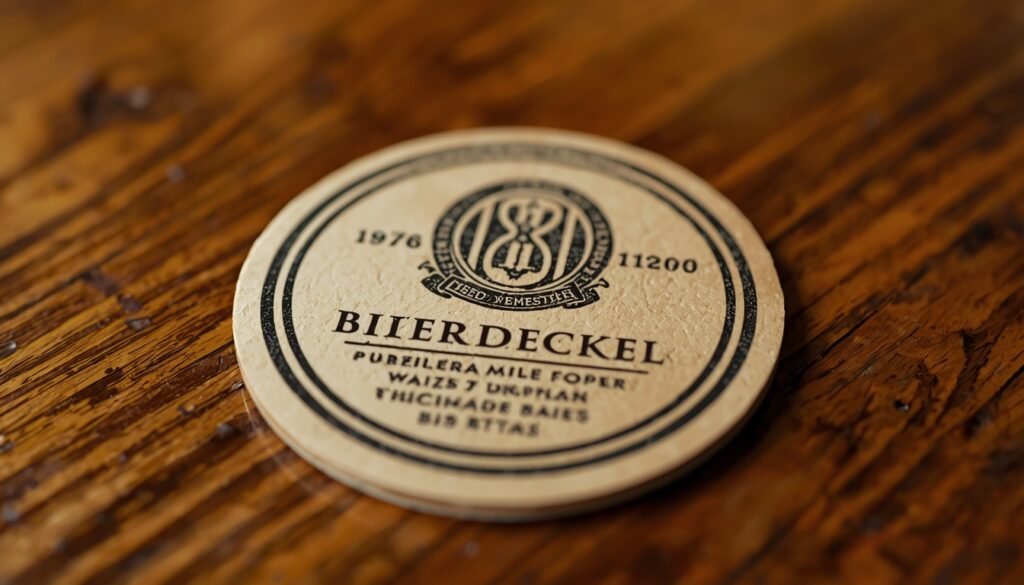
For many people, the most familiar real-world expression of pappedeckel is the German Bierdeckel, or beer coaster. The German Wikipedia entry on Bierdeckel describes it as a support for beer glasses, mugs, and bottles, and notes that it is usually made from cardboard, explicitly identifying that material as Pappedeckel. That is why the term often brings to mind the classic round or square cardboard coaster seen in pubs, cafés, and restaurants.
This coaster connection gives the word a much more vivid identity. Instead of remaining an abstract material term, pappedeckel becomes something people can picture immediately under a cold glass on a wooden table. It becomes tactile. You can imagine the dry texture, the slight thickness, and the way it quietly catches moisture. That ordinary image is one reason the word feels so memorable once it is understood.
A Brief History of the Pappedeckel Tradition
The history behind the modern coaster helps explain why pappedeckel became so widely associated with hospitality. English-language reference material notes that the earliest coasters were created for wine bottles and decanters and were already in common use after about 1760, although those early versions were not yet the familiar cardboard beer mat. The object developed gradually, moving from formal dining support toward the everyday drink coaster people recognize today.
The cardboard version has a specifically German story attached to it. Reference material notes that in 1880 a German printing company, Friedrich Horn, introduced a coaster made of cardboard, and in 1892 Robert Sputh produced an important early wood-pulp version. Those developments helped turn the coaster into a more modern, absorbent, and printable object, which is part of the reason pappedeckel became such a natural fit for beer culture and public drinking spaces.
The Material Qualities That Make It Work
A good pappedeckel works because the material is not random. Drink coasters are often made from high-grammage paperboard or pulpboard, and the important qualities include water absorbency, resistance to rubbing when wet, and the ability to accept printed designs. These are not glamorous features, but they are exactly what make a simple cardboard coaster effective in real use. It has to absorb, hold shape, and still look presentable on the table.
German reference material gives the object an even more concrete shape by describing the typical Bierdeckel as around 1.2 to 1.5 millimeters thick and usually weighing between 5 and 10 grams. Those details explain why it feels so distinctive in the hand. It is light, but not flimsy. It is thin, but not weak. The material sits in a useful middle ground where strength and absorbency work together.
How Pappedeckel Protects Surfaces So Well
The everyday purpose of a pappedeckel is simple, and that simplicity is part of its strength. A coaster protects a table or bar surface from the condensation that forms on the outside of a cold drink. Without that layer underneath, moisture can spread, drip, stain, or leave rings behind. The coaster quietly solves that problem before it becomes noticeable, which is why it feels so natural in any setting where drinks are served.
A coaster can also do more than protect the table below it. Sources note that it may be placed on top of a drink to signal that the beverage is not finished or to help prevent contamination, especially in outdoor settings. That detail shows how the function of pappedeckel is broader than many people assume. It is not just a mat beneath the glass. It is also part of the small ritual of serving and protecting a drink.
Design, Shape, and Printed Identity
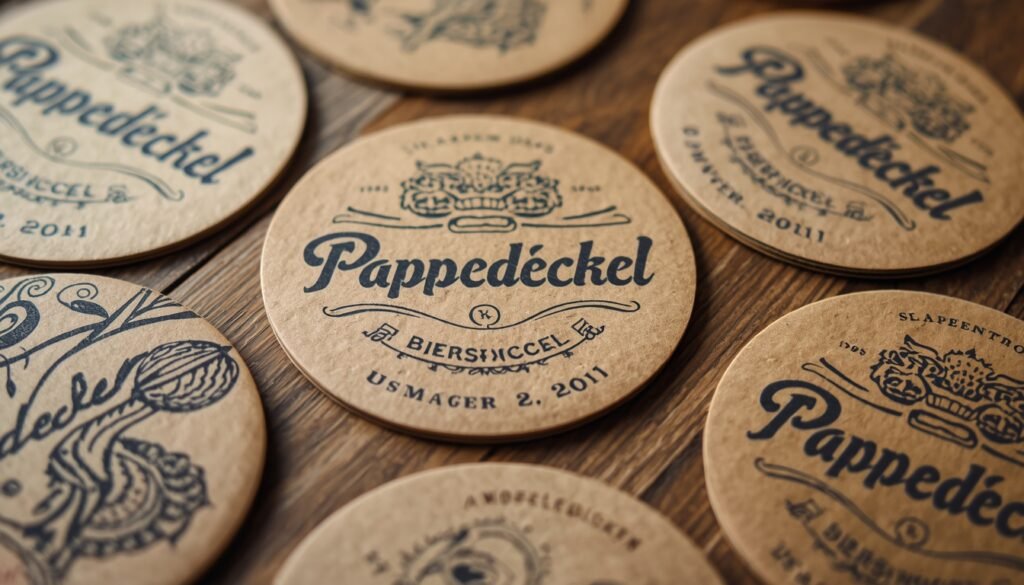
One reason pappedeckel remains culturally visible is that it is easy to print, shape, and adapt. Coasters are often used for custom images, logos, and advertising, turning a plain surface into a small branded object that stays in front of the customer for the duration of a drink. That makes the coaster more than a functional layer. It becomes part of the visual identity of a brewery, bar, restaurant, or event.
The object also has a recognizable physical form. German reference material notes that round beer coasters in the German-speaking world commonly have a standard diameter of 107 millimeters, while square versions with side lengths of 93 millimeters are also common. These measurements show that the classic coaster design is not accidental. It has been shaped by long use, familiar handling, and the practical size of glasses, mugs, and serving spaces.
Pappedeckel in Hospitality and Everyday Service
In bars, pubs, and restaurants, pappedeckel is part of the service environment as much as the glass itself. Sources note that coasters are used to protect tables and bar surfaces, but they also contribute to the feel of a well-run space. A cold drink set down on a coaster looks deliberate and complete. The detail is small, yet it adds to the sense of care that people notice even when they do not consciously think about it.
That role in hospitality helps explain why the coaster has lasted for so long. It is cheap enough to be widely used, practical enough to justify its place, and visible enough to carry a brand or message. In other words, pappedeckel succeeds because it serves several needs at once without becoming complicated. It protects, presents, and communicates, all while remaining one of the simplest objects on the table.
The Legal and Cultural Life of the Coaster
The story of pappedeckel does not end with moisture and table care. German reference material notes that when a host or pub owner writes down the quantity and type of food or drink on a Bierdeckel, that marked coaster can take on the character of a record used for billing. This gives the object a surprising seriousness. Something that looks disposable can briefly become part of a social and legal transaction.
There is also a cultural side to the coaster that goes beyond service. English-language reference material notes that some coasters become collectible items, and the practice of collecting them is known as tegestology. That might sound unexpected, but it makes sense once you think about how many designs, logos, places, and moments a simple coaster can preserve. A pappedeckel may be temporary in use, yet memorable in what it represents.
Why Pappedeckel Still Feels Relevant Today
A word like pappedeckel survives because the object behind it still makes sense. Even in a world full of synthetic materials and constantly changing product design, a cardboard coaster remains useful. It is easy to handle, easy to understand, and closely tied to real situations that have not disappeared. People still gather around tables, still order cold drinks, and still need a clean, absorbent surface between glass and wood.
Its continued relevance also comes from its balance of function and simplicity. The coaster does not ask for attention, yet it improves the experience around it. That kind of object tends to last because it solves a small problem very well. In that sense, pappedeckel is more than a borrowed or unfamiliar word. It is a reminder that some of the most useful things in daily life are also the most modest.
Pappedeckel as a Word People Can Actually Understand
For global readers, the best way to understand pappedeckel is not to overcomplicate it. It belongs to a family of German words tied to cardboard, covers, and coasters, and in everyday use it most naturally points to the kind of cardboard piece people would recognize under a drink. Once that connection becomes clear, the word stops feeling foreign and starts feeling descriptive in a very direct way.
That is why the word has such quiet charm. It sounds specific because it is specific, but it also opens onto a very familiar world of cafés, bars, gatherings, packaging, and material culture. A pappedeckel is small, ordinary, and easy to overlook, yet it carries history, design, language, and use all at once. Few simple objects manage to hold that much meaning without trying too hard.
Conclusion
In the end, pappedeckel is a word that becomes clear through use. It points to cardboard-based practicality, and in the most familiar sense it connects strongly to the classic German-style coaster that sits beneath a drink and quietly does its job. Through related forms such as Pappdeckel, Pappendeckel, and Bierdeckel, the term opens up a small but rich corner of everyday material culture.
What makes the idea memorable is not complexity, but usefulness. A pappedeckel protects surfaces, carries print, serves hospitality, and even holds a place in history and language. It is one of those objects that proves how much meaning can sit inside something plain. Once you understand it, the word no longer feels obscure at all. It feels exact, practical, and surprisingly human.
Leave a Reply