
Some words become interesting simply because they are difficult to understand. Incfidelibus is one of those unusual terms. It looks like Latin, sounds historical, and has appeared in different corners of the internet, leaving many people wondering what it actually means.
The first thing to understand is that incfidelibus is not clearly established as a standard Latin word. Instead, it closely resembles the recognized Latin form infidelibus, which is related to infidelis and can refer to people who are unfaithful, disloyal, or unbelieving depending on the context. Several modern websites discuss incfidelibus as a misspelling, altered form, or Latin-inspired expression.
This distinction matters. A word can look convincingly Latin without actually being a documented classical Latin term. It can also acquire a new identity online through usernames, branding, articles, or other digital uses.
In this guide, we will examine incfidelibus meaning, its possible Latin roots, how it differs from infidelibus, its historical and religious associations, and why the term has appeared in modern online discussions.
What Does Incfidelibus Mean?
The safest answer is that incfidelibus does not have a firmly established independent dictionary definition.
The spelling is very close to infidelibus, a Latin grammatical form associated with infidelis. Depending on context, infidelis can carry meanings such as:
- Unfaithful
- Disloyal
- Unbelieving
- Without faith
- An unbeliever or infidel
The ending -ibus is significant because Latin uses it for certain plural forms, including the dative and ablative cases. As a result, infidelibus can have context-dependent translations such as “to the unfaithful,” “for the unbelievers,” or “by/with the unfaithful.”
Because incfidelibus contains an additional “c,” it should not automatically be treated as an authentic historical Latin spelling.
A practical definition, therefore, is:
Incfidelibus is best treated as a Latin-looking or altered online term associated with the recognized Latin word infidelibus, rather than as a confirmed standard Latin word in its own right.
This explanation is more reliable than assigning the word a fixed philosophical meaning without evidence.
Incfidelibus vs. Infidelibus
The difference between these two spellings is small but important.
| Term | Status | General association |
| Incfidelibus | Uncertain/altered form | Latin-inspired online term |
| Infidelibus | Recognized Latin form | Unfaithful, unbelieving, or disloyal people depending on context |
| Infidelis | Latin adjective/noun | Unfaithful, unbelieving, disloyal |
The extra c in incfidelibus is what creates most of the confusion.
If you are writing academically about the Latin language, it is better to use infidelibus when that is the intended word. If you are specifically researching the internet term incfidelibus, retain its spelling but explain that its linguistic status is uncertain.
This simple distinction can prevent a major factual mistake.
The Latin Roots Behind the Term
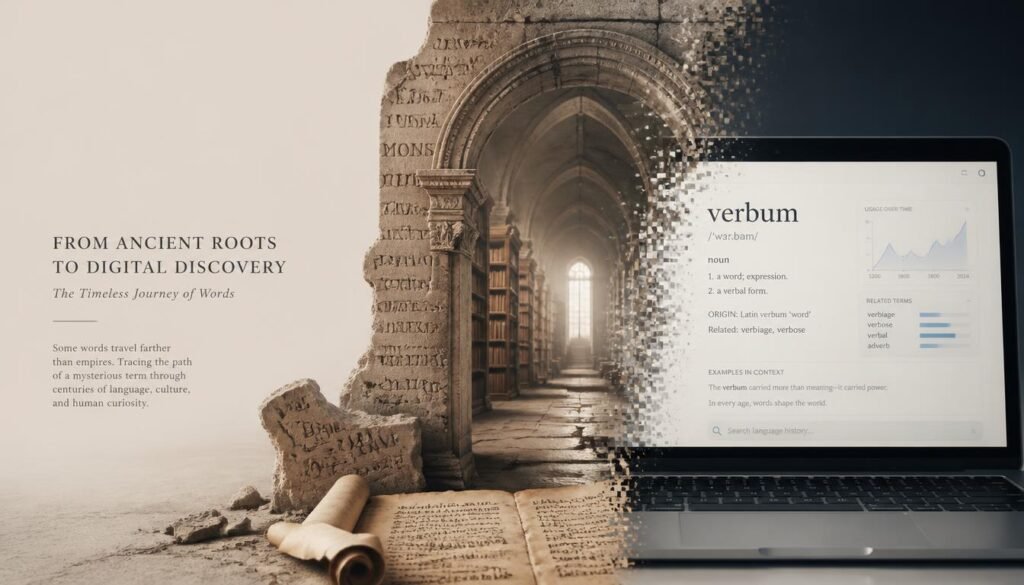
To understand why incfidelibus looks meaningful, it helps to examine the Latin family behind it.
The recognized form infidelibus is connected to infidelis. The word fidelis is associated with faithfulness and loyalty, while fides relates to faith, trust, or confidence.
The negative prefix in- can produce the idea of “not” or “un-” in certain Latin formations. That helps explain why words from this family can relate to ideas such as:
- Faith and belief
- Loyalty and trust
- Unfaithfulness
- Disbelief
- Religious identity
However, breaking a word into recognizable Latin-looking pieces does not prove that every resulting spelling was historically used.
That is particularly important with incfidelibus. Some online articles confidently describe it as an ancient Latin expression, but available discussions also point out that the exact spelling is not supported as a standard Latin word.
Why Does Incfidelibus Look Like Latin?
Latin has had a major influence on English and many European languages. It is especially associated with:
- Religion
- Law
- Medicine
- Philosophy
- Academia
- Historical documents
- Government terminology
Because of this history, Latin-looking words often feel formal or ancient.
The structure of incfidelibus reinforces that impression. The ending -ibus, for example, resembles genuine Latin grammatical forms. The root resembles words associated with faith and loyalty.
That combination can make the term appear authentic even when its exact spelling is questionable.
This is a useful lesson when researching unfamiliar words: appearance is not enough to establish etymology.
Historical and Religious Context
The recognized Latin vocabulary surrounding infidelis has a long connection with discussions about belief and religious identity.
In historical Christian writing, related forms were sometimes used to describe people who were considered outside a particular faith. The term could therefore carry a religious meaning rather than simply describing someone who had broken a personal promise.
One example often discussed in connection with infidelibus is the Latin Vulgate wording in 2 Corinthians 6:14, which contains infidelibus. In that setting, the term is associated with “unbelievers.”
However, historical context is important.
The meaning of a Latin word depends on the sentence, author, period, and subject being discussed. A modern writer should therefore avoid assuming that every use of infidelis or infidelibus had exactly the same meaning.
It could relate to religious belief, faithfulness, loyalty, or broader ideas of trust depending on context.
Was Incfidelibus Used in Ancient Latin?
There is not enough reliable evidence to confidently describe incfidelibus itself as a standard ancient Latin word.
This is one of the most important points when researching the term.
Some websites describe it as though it were a documented classical or medieval expression, while others identify it as a distorted version of infidelibus.
For a publication-ready explanation, it is better to avoid unsupported historical claims.
Instead, distinguish between:
- The recognized Latin word — infidelibus.
- The uncertain spelling — incfidelibus.
- Modern online interpretations — meanings or associations created by websites and users.
This approach keeps the discussion accurate without pretending that uncertain information is an established fact.
Why People Search for Incfidelibus
There are several reasons someone might encounter or search for this unusual term.
1. Curiosity
The word looks mysterious. Someone may see it in a search result, comment, username, or website and want to know what it means.
2. Language Research
People interested in Latin may search for the term because they suspect it is an old Latin expression.
3. Religious or Historical Research
Because of its resemblance to infidelibus, the term can lead people toward discussions of faith, belief, and religious terminology.
4. Online Mentions
Modern websites have used incfidelibus in different types of content, including articles discussing its meaning and online identity.
5. Search Engine Curiosity
Rare words often attract searches because people want a simple explanation of something they have encountered online.
The problem is that search results do not automatically distinguish between scholarly information and content created primarily to attract clicks.
Incfidelibus as an Online Term
The modern internet has given the word another layer of meaning.
Several websites report seeing incfidelibus in online posts, comments, or contact identifiers connected with questionable services involving hacking, spying, phone monitoring, or accessing private accounts.
This usage should be separated completely from the Latin discussion.
A username or email identifier using the word does not prove anything about its linguistic origin. Likewise, the fact that a questionable website uses a Latin-looking name does not make the service legitimate.
If you encounter incfidelibus in connection with an offer to:
- Hack someone’s phone
- Access private messages
- Break into a social media account
- Monitor another person’s device without permission
- Recover passwords through unauthorized methods
you should treat the offer with caution.
Such services may involve privacy violations, fraud, malware, or illegal access.
Why Looking Names Show Up Online
Using strange or Latin-inspired words online is not strange.
A rare word can be nice as a username or brand because it might seem:
- Mysterious
- Technical
- Historical
- Exclusive
- Hard to copy
This does not mean the name has an actual old meaning.
The same idea goes for websites and businesses. A name that looks professional, a logo or technical words should not be taken as proof of trustworthiness.
When looking at an online service don’t just look at the name. Check its reputation, contact details, policies, reviews from others and what it says.
Myths About Incfidelibus
Myth 1: It is definitely an old Latin word
There is not enough proof to say that. The correct form is infidelibus while incfidelibus looks like an unclear spelling.
Myth 2: It has one clear English meaning
It does not. Even the Latin form infidelibus needs context for the translation.
Myth 3: It always means religion
The Latin group is closely tied to faith and belief. The bigger ideas can include loyalty, faithfulness and trust.
Myth 4: Every website about it is correct
That is not safe to think. Some articles repeat the claims without good language proof.
Myth 5: An online use shows the words origin
A modern name, brand or website can’t prove a word was in Latin.
How to Check Incfidelibus Right
If you are checking incfidelibus for an article, school work, website or just for fun use a way.
Step 1: Look at the spelling
Check both:
- incfidelibus
- infidelibus
This shows quickly if the odd spelling is connected to a known word.
Step 2: Look at books
Don’t only use blogs. Check Latin dictionaries, old texts, academic papers and digital old books.
Step 3: Check the sentence around it
Latin meaning changes a lot with grammar. Where it is. One word may not be enough for a translation.
Step 4: Keep proof separate from new ideas
If a website says incfidelibus has a deep meaning ask if the idea comes from an old source or just from a guess.
Step 5: Look at references on their own
If you are checking the word because you saw it online look at that use not assume it means what it did in old Latin.
Helpful Advice for Writers Using Incfidelibus
If you want to share information about this word, being right is more important than making it seem real.
Here are some good ways:
- Explain the spelling change clearly.
- Say how it connects to infidelibus.
- Don’t call it Latin without proof.
- Use context when talking about translations.
- Keep meaning separate from modern internet use.
- Don’t push services that use the word.
- Use trusted language and history sources when you can.
- Tell readers when an idea is not certain.
This way is especially good for SEO content because search engines like pages that give answers instead of just repeating what is already there.
What Can We Learn From the Word?
The story of incfidelibus shows how words change when they move from books to the internet.
A word can start with a shape, get misspelled or changed and then have a new online life.
Search engines can make this more obvious. Once a few websites explain a word, later articles might copy those explanations. Eventually a guess can seem like fact just because many sites say it.
That is why just repeating something should not be seen as proof.
For readers the lesson is simple: always check the source when a rare word is said to be real history.
Digital Knowledge
This topic also teaches a lesson about being smart online.
When you see a word online ask these things:
- Where did the word first show up?
- Is there an entry?
- Are there examples?
- Who is saying this?
- Do sources back it up?
- Is the word being used as a name not a word?
- Does the website have proof?
- Does the information help sell something?
These questions help tell real language facts from copied internet content.
This is especially important when the word is with claims about hacking, watching or money problems.
FAQS
What does incfidelibus mean?
Incfidelibus does not have a meaning on its own. It looks a lot like the known Latin form infidelibus, which can mean things like unfaithfulness, disloyalty or no belief depending on the sentence.
Is incfidelibus a Latin word?
The exact spelling incfidelibus is not clear as a Latin word. It is better to think of it as a changed or Latin- form of infidelibus unless clear old proof says it is real.
What does infidelibus mean in Latin?
Infidelibus is a form from infidelis. It can mean “to the unfaithful ” “for the unbelievers “. By/with the unfaithful” depending on the sentence.
Is incfidelibus connected to religion?
Not directly. Its known Latin form, infidelibus has old connections with belief and not believing, including religious parts.. The spelling incfidelibus should not be seen as a real religious word.
Why does incfidelibus show up on websites?
The word is on websites because people look for its meaning. Some sites use it as a name or topic. Some online sources also tie it to hacking or watching services so those uses should be watched.
Is incfidelibus the same as infidelibus?
No. They are spellings. Infidelibus is the Latin form while incfidelibus is an uncertain or changed version that appears online.
Can I use incfidelibus in a school paper?
You can talk about it if it is important to your work. Explain that it is not clear. If you want to use the Latin word infidelibus is better.
Does incfidelibus have one meaning?
No. Its online meanings are different. Some talks see it as a Latin- word about faith or no faith while others use it as an online name. These uses should not be seen as one meaning.
Conclusion
Incfidelibus is a word that makes people think it is certain but there is not enough proof. Even though it looks like Latin, the exact spelling is not clear as a Latin word.
The known form is infidelibus, a form from infidelis and is connected to things like unfaithfulness, disloyalty and not believing. Its exact English meaning depends on the sentence and the old time.
The online world has added more to the word. Incfidelibus has appeared in articles, names and bad online references including some linked to hacking and watching. Those new uses should be kept separate from the real language question. Checked carefully.
In the end the best way to understand incfidelibus is to see the difference between a Latin word and a new online spelling. If you are checking or writing about the word focus on proof, context and real sources of thinking a Latin-like word has an old past.
Leave a Reply