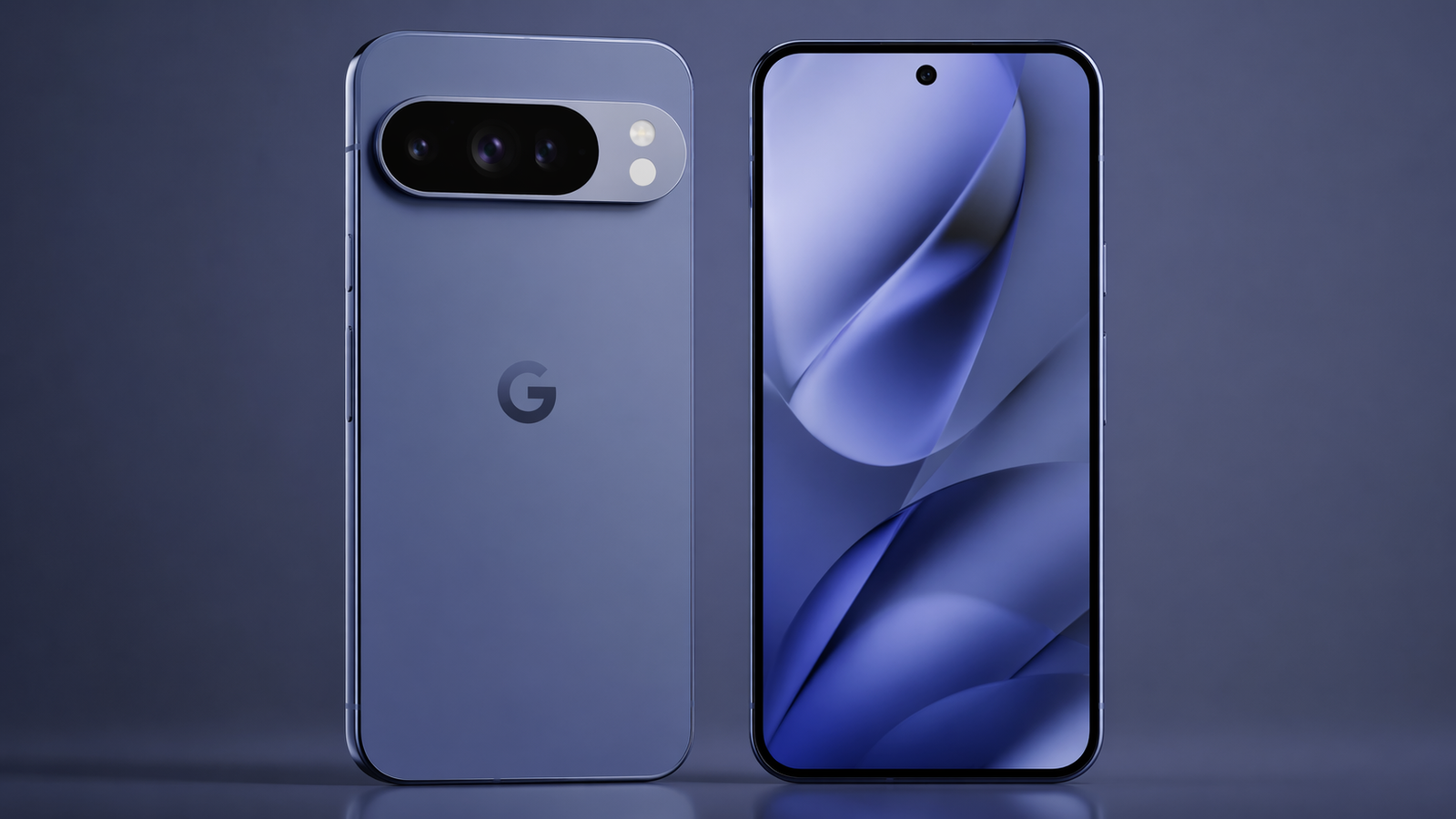
The Google Pixel 10 series is the clearest version of Google’s flagship phone lineup so far. Google’s current phone category groups the premium family around Pixel 10, Pixel 10 Pro, and Pixel 10 Pro Fold, while Google’s hardware support specs page confirms separate sizing for Pixel 10, Pixel 10 Pro, and Pixel 10 Pro XL, showing that the Pro line now properly splits into two slab sizes plus a foldable tier.
That matters because the Pixel range now feels less confusing than it used to. The regular Pixel 10 is the mainstream flagship. The Pixel 10 Pro is the smaller premium option. The Pixel 10 Pro XL is the larger premium option. And the Pixel 10 Pro Fold is the multitasking-first halo device. Google formally introduced the Pixel 10 phones in August 2025 and tied the whole generation to the new Tensor G5 platform, on-device AI improvements, and long support promises.
For buyers in 2026, the Pixel 10 series is important because it is no longer just about “clean Android plus a good camera.” Google is now pushing a more complete flagship story: stronger cameras, better zoom across the range, smarter AI features, magnetic Qi2-style charging through Pixelsnap, and seven years of new features and updates on the main phones.
What Phones Are in the Google Pixel 10 Series?
At the flagship level, the Google Pixel 10 series includes four main devices: Pixel 10, Pixel 10 Pro, Pixel 10 Pro XL, and Pixel 10 Pro Fold. Google’s Pixel hardware specs page lists the display sizes for the first three clearly: 6.3 inches for Pixel 10, 6.3 inches for Pixel 10 Pro, and 6.8 inches for Pixel 10 Pro XL. The Fold is listed separately on the Google Store as the premium foldable option.
Pricing also gives the lineup a very clear ladder. The official Pixel 10 page starts at $799. The Pixel 10 Pro starts at $999 on Google Store. The Pixel 10 Pro Fold starts at $1,799 on its configuration page. Google’s launch blog positioned the Pixel 10 Pro XL above the Pro tier and described it as the bigger premium model in the family.
So the lineup now makes more sense than earlier Pixel generations. Instead of one “good Pixel” and one vaguely better Pro, Google has a proper flagship ladder for different budgets and use cases. That is one of the biggest reasons the Pixel 10 series feels more mature. This is an inference from the official lineup structure and pricing.
Tensor G5 Is the Core of the Series
The biggest technical shift in the Google Pixel 10 series is the move to Tensor G5. Google’s official Tensor post calls it a major performance step for Pixel 10 and says it was built to deliver faster on-device AI, more proactive features, stronger camera performance, and all-day battery life.
The Pixel 10 product page goes even further and calls Tensor G5 Pixel’s fastest, most powerful chip yet. Google says it is custom-built for advanced Google AI, better photos and videos, and strong everyday efficiency. That chip-level positioning matters because Pixel is no longer trying to win only on software tricks. It is trying to make hardware, AI, and camera output feel like one system.
Google also links Tensor G5 closely to Gemini Nano, especially on the Pro side. In the Pixel 10 launch blog, Google says Tensor G5 was designed alongside the newest Gemini Nano model to support more powerful on-device features. That is a big part of the series identity: Google wants Pixel 10 to feel more proactive and useful without always depending on cloud processing.
AI Is a Bigger Story This Year
AI is everywhere in smartphone marketing now, but the Google Pixel 10 series ties it more directly to how the phones behave. Google introduced Magic Cue for the Pixel 10 generation as a proactive assistant layer that can surface relevant information at the right moment, such as helping pull up useful details while you are mid-task. Google describes this as a more natural, contextual AI experience powered by Tensor G5 and Gemini Nano.
Google also added Camera Coach, which is meant to help users frame and capture better shots. On the Pro devices, Google highlights more advanced AI-assisted camera features such as Pro Res Zoom, while the overall camera stack continues to lean heavily on computational photography and Video Boost-style processing.
What makes this more interesting than a simple spec bullet is that Google is trying to make AI feel embedded into normal phone use rather than bolted on. That is still partly a product vision claim from Google, but it is reflected consistently across the official launch materials.
The Standard Pixel 10 Is More Serious Than Before
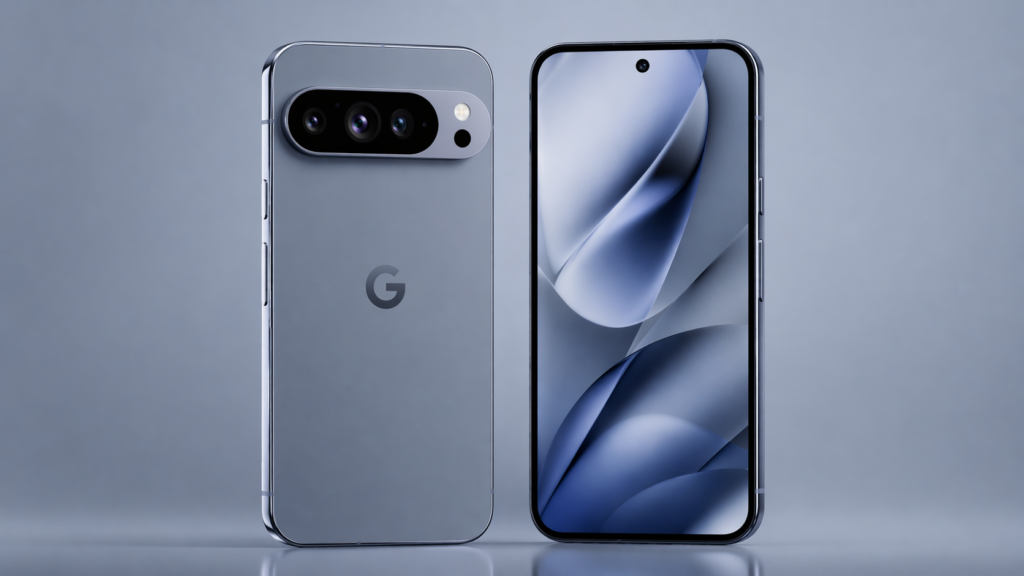
One of the most important changes in the Google Pixel 10 series is that the regular Pixel 10 looks less compromised than older base models. Google’s official Pixel 10 page says the phone now has an advanced triple rear camera, not just a basic dual-camera setup. The page highlights a 48 MP wide, 13 MP ultrawide, and 10.8 MP telephoto system, with zoom reaching 20x.
That matters because older base Pixels often gave you the Google software experience but not the more complete camera flexibility. Pixel 10 changes that by giving the mainstream model a telephoto option. For many buyers, that makes the Pixel 10 feel like a real flagship rather than a cheaper version of one. That conclusion is an inference from the official camera configuration and the historical gap between base and Pro Pixel tiers.
The display also looks strong for the price. Google says the Pixel 10 has a 6.3-inch Actua display and can reach up to 3000 nits, which should make outdoor visibility stronger than many earlier non-Pro Pixels. Google also says the phone lasts over 24 hours, or up to 100 hours with Extreme Battery Saver.
Pixel 10 Pro and Pixel 10 Pro XL: The Premium Slab Phones
The Pixel 10 Pro and Pixel 10 Pro XL are where Google puts its most premium non-folding experience. The Google Store says the Pixel 10 Pro can take Google’s highest-quality photos and videos, and the launch blog adds that the Pro phones feature bigger batteries, upgraded speakers, 16 GB of RAM, and faster charging.
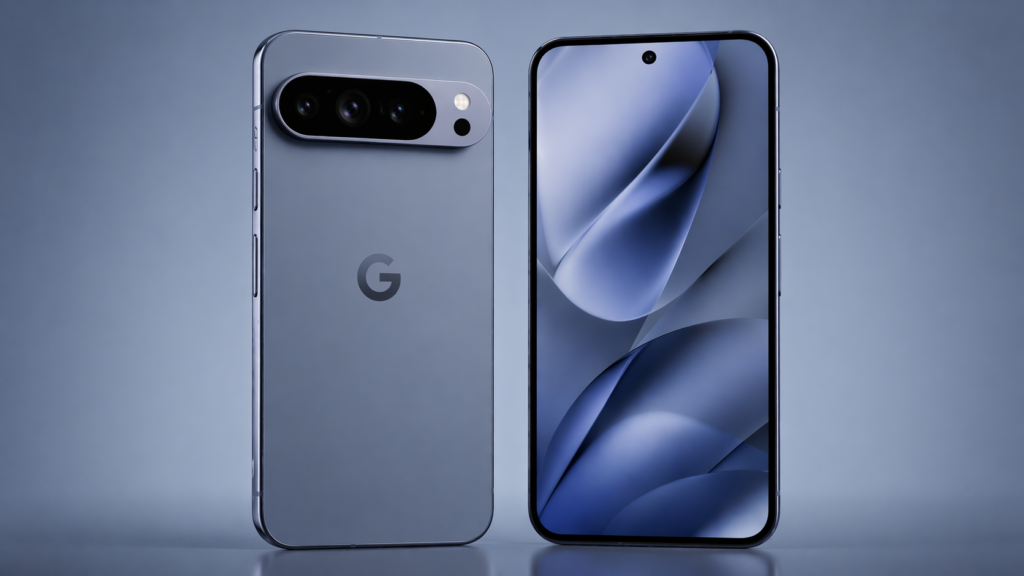
Camera hardware is the biggest reason many buyers will move from the standard Pixel 10 to the Pro tier. Google’s official Pro specs page lists a 50 MP wide, 48 MP ultrawide with Macro Focus, and 48 MP 5x telephoto system, with Pro Res Zoom up to 100x. Google also lists higher-end video features including 8K video recording at 24/30 FPS powered by Video Boost.
The main difference between the Pro and Pro XL is size. Google’s official hardware specs page confirms the Pro at 6.3 inches and the Pro XL at 6.8 inches. So the Pro is the compact premium Pixel, while the Pro XL is the large-screen premium Pixel. That gives buyers a real size choice without forcing them to give up flagship-level hardware.
This is one of the smartest things about the Pixel 10 series. Google is no longer treating “Pro” as one single shape. It is now matching what other major flagship brands have done for years by offering a smaller Pro and a larger Pro XL.
Pixel 10 Pro Fold Is the Showcase Device
The Pixel 10 Pro Fold is clearly the premium showcase phone in the Google Pixel 10 series. Google’s official product page calls it the company’s best phone for multitasking and entertainment, and the device is positioned around its 8-inch inner display, 6.4-inch cover display, upgraded hinge, and premium productivity use cases.
Google also pairs the Fold with Tensor G5 and 16 GB of RAM, making it clear that this is not just a novelty device. It is supposed to be the most capable multitasking Pixel in the family. Its starting price of $1,799 also makes its role obvious: this is the aspirational Pixel, not the mainstream one.
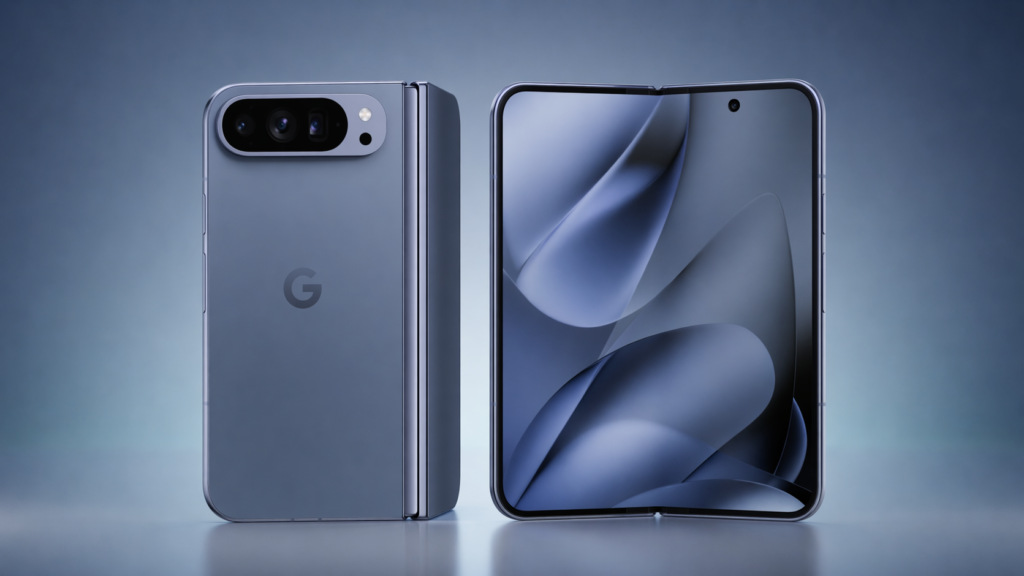
Camera-wise, the Fold is also more serious than many people expect from a foldable. Google’s official store materials describe it as a premium Pixel camera phone with a rear camera system and multiple front-facing camera options for inner and outer screen use. The full camera configuration is not pushed as aggressively as the Pro slab models, but Google is clearly trying to avoid the idea that the foldable is only about the screen.
For the right user, the Fold is the most distinctive phone in the lineup. For most buyers, though, it is likely to remain the niche option because of price. That is an inference from official pricing and product positioning.
Charging, Battery, and Everyday Convenience
Charging is one of the quieter upgrades in the Google Pixel 10 series, but it is more important than it first looks. Google says the Pixel 10 phones now support Pixelsnap, which uses magnetic technology to snap onto Qi2 wireless chargers more cleanly. This gives the series a more modern accessory and charging ecosystem.
Battery claims are also solid across the official materials. Google says Pixel 10 lasts 24+ hours and up to 100 hours with Extreme Battery Saver. The Pro pages make similar claims, and Google’s launch blog adds that the Pro phones have the biggest batteries in the series.
This does not prove real-world battery life for every user, because that always varies by use, but it does show that Google is no longer treating endurance like a side note. Battery and charging are now part of the series identity, not just basic checklist items.
Design and Software Support
Design-wise, Google is continuing the familiar Pixel camera bar look, but with more refinement. The official launch blog describes more polished materials and finishes, especially on the Pro models. The Pro page emphasizes a matte glass back and more premium fit and finish, while the standard Pixel 10 continues the cleaner everyday flagship design.
Software support is one of the strongest reasons the Google Pixel 10 series matters in 2026. Google says the phones come with seven years of new features and updates. That puts Pixel in a very strong position for buyers who keep phones longer and want a device that still feels relevant years after launch.
That long support window also strengthens the overall value case. Even if the upfront pricing is not low, longer support makes the phones easier to justify over time. That is an inference from the official support promise and flagship pricing.
Which Pixel 10 Model Makes the Most Sense?
For most buyers, the Pixel 10 looks like the value sweet spot. It now has a telephoto camera, Tensor G5, strong brightness, Pixelsnap charging support, and the same long update promise as the more expensive models. That makes it a much stronger default recommendation than many earlier base Pixels.
The Pixel 10 Pro is the better pick for people who want the best camera setup without moving to a giant phone. The Pixel 10 Pro XL is for users who want the full premium package in a larger size. And the Pixel 10 Pro Fold is for buyers who specifically want a foldable-first experience and are willing to pay for it. Those buyer-fit conclusions are inferences based on official product size, price, and feature differences.
So the real strength of the Google Pixel 10 series is not just that the phones are good individually. It is that the lineup now makes more sense as a family. Each model has a clearer purpose.
Final Thoughts
The Google Pixel 10 series feels like the point where Google’s phone strategy became properly complete. The lineup now covers the mainstream flagship buyer, the compact premium buyer, the large-screen premium buyer, and the foldable enthusiast. Across the range, Google has tied the story together with Tensor G5, stronger AI features, better zoom and camera flexibility, magnetic charging support, and a long update promise.
That does not mean every phone in the series is for every person. But it does mean the family is finally easy to understand and easier to recommend. And for a keyword like Google Pixel 10 series, that is the clearest takeaway: this is the generation where Pixel stopped feeling like a few isolated good phones and started feeling like a fully built flagship ecosystem.
FAQs
What phones are in the Google Pixel 10 series?
The flagship lineup includes Pixel 10, Pixel 10 Pro, Pixel 10 Pro XL, and Pixel 10 Pro Fold. Google’s official store groups the series around Pixel 10, Pixel 10 Pro, and Pixel 10 Pro Fold, while Google’s hardware specs page separately confirms Pixel 10 Pro XL sizing.
What chip does the Pixel 10 series use?
Google says the flagship Pixel 10 phones use Tensor G5, which it describes as Pixel’s fastest and most powerful chip yet.
How much does the Pixel 10 series cost?
The official starting prices are $799 for Pixel 10, $999 for Pixel 10 Pro, and $1,799 for Pixel 10 Pro Fold. Google positioned Pixel 10 Pro XL above the Pro tier in its launch materials.
Does the regular Pixel 10 have a telephoto camera?
Yes. Google says Pixel 10 has an advanced triple rear camera and includes a 10.8 MP telephoto camera with zoom up to 20x.
How long will Google support the Pixel 10 series?
Google says the phones come with seven years of new features and updates.
Which Pixel 10 model is best for most people?
Based on Google’s official feature and price split, the standard Pixel 10 looks like the strongest value option, while the Pro models are better for buyers who want the best cameras or a larger display. This is an inference from the official lineup.
Leave a Reply